
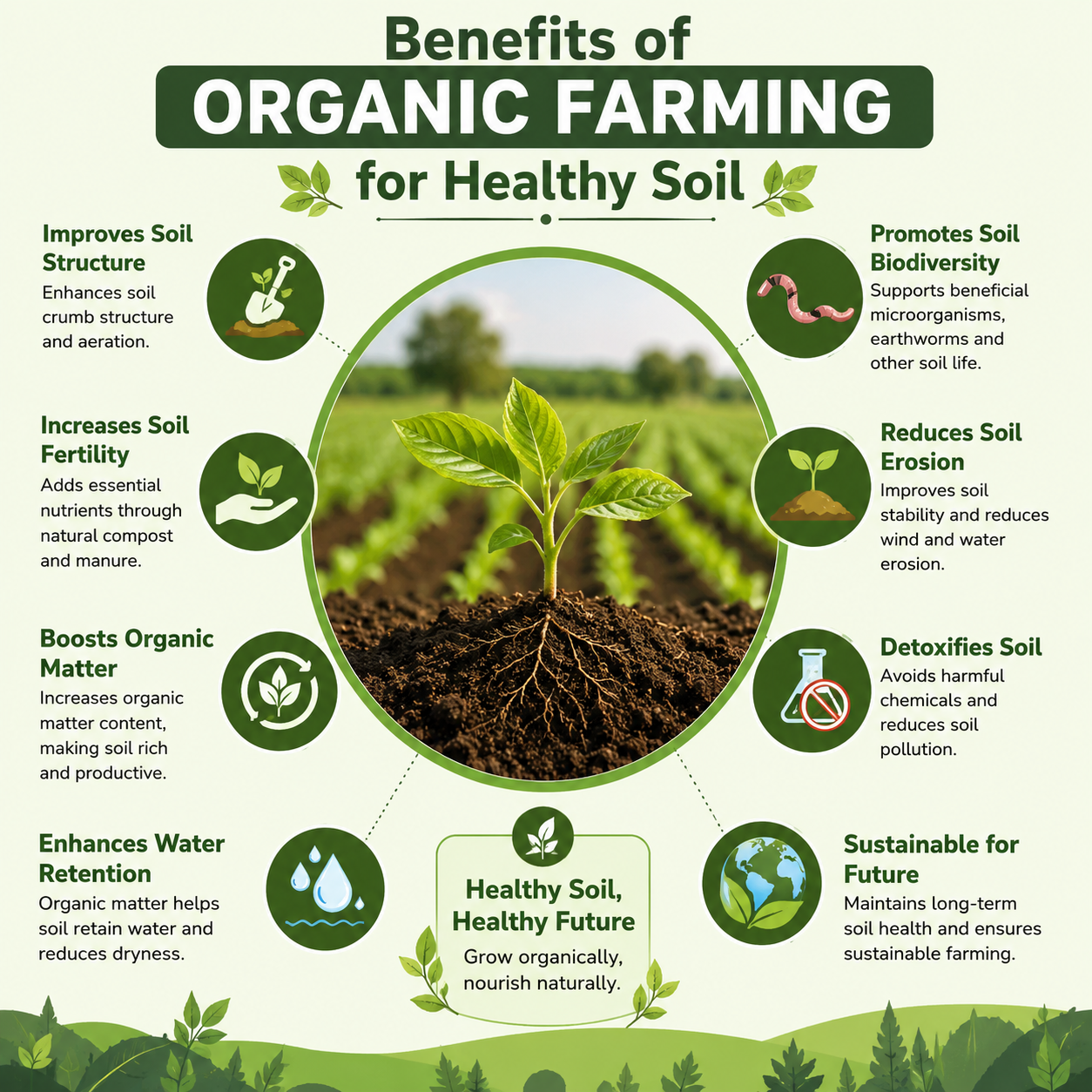
GAURAV SINGH RANA
How Bio-Fertilizers Improve Soil Health and Increase Crop Productivity
By Green Diet Team
Sep 01, 2026
1256 Views
8 Comments
Modern agriculture is increasingly focused on achieving higher crop yields while maintaining long-term soil health. Excessive use of chemical fertiliz...
Modern agriculture is increasingly focused on achieving higher crop yields while maintaining long-term soil health. Excessive use of chemical fertilizers can affect soil quality, microbial activity, and the overall balance of nutrients over time. This is where bio-fertilizers can play an important role.
Bio-fertilizers are natural agricultural inputs containing beneficial microorganisms that help improve nutrient availability, support soil fertility, and promote healthier plant growth. When used as part of a balanced crop nutrition program, they can contribute to sustainable and productive farming.
What Are Bio-Fertilizers?
Bio-fertilizers are products containing beneficial microorganisms such as bacteria, fungi, or other naturally occurring microbes. These microorganisms help plants access nutrients that may already be present in the soil but are not easily available to plants.
Common beneficial microorganisms include:
Nitrogen-fixing bacteria
Phosphate-solubilizing microorganisms
Potassium-mobilizing microorganisms
Mycorrhizal fungi
Other beneficial soil microbes
Unlike conventional fertilizers that directly supply nutrients, bio-fertilizers primarily work through biological processes that improve nutrient availability and soil microbial activity.
How Bio-Fertilizers Improve Soil Health
1. Improve Nutrient Availability
Beneficial microorganisms can help convert nutrients into forms that plants can absorb more efficiently. For example, certain microorganisms can help make phosphorus more available to plant roots.
Better nutrient availability can support stronger and healthier crop development.
2. Support Beneficial Soil Microorganisms
Healthy soil is a living ecosystem. Beneficial microorganisms play an important role in nutrient cycling and organic matter decomposition.
Bio-fertilizers can support microbial activity and contribute to a healthier soil environment.
3. Improve Soil Fertility
Regularly maintaining biological activity in the soil can contribute to improved soil fertility. Bio-fertilizers can complement other soil-management practices such as the use of organic matter, compost, crop rotation, and balanced fertilization.
4. Encourage Better Root Development
A healthy root system is essential for efficient water and nutrient absorption. Certain beneficial microorganisms can interact with plant roots and create a more favorable environment for root growth.
Stronger roots can help plants utilize available nutrients and water more effectively.
How Bio-Fertilizers Can Increase Crop Productivity
Crop productivity depends on several factors, including soil fertility, water availability, crop variety, weather, pest management, and proper nutrition.
Bio-fertilizers can contribute to productivity by improving the efficiency of nutrient utilization and supporting healthier plant growth.
Potential benefits include:
Better nutrient absorption
Improved root growth
Healthier plant development
Improved soil microbial activity
Better utilization of available nutrients
Support for sustainable crop production
However, bio-fertilizers should not be considered a complete replacement for every other agricultural input. Their effectiveness depends on the crop, soil conditions, climate, application method, and the specific microorganisms used.
Bio-Fertilizers and Sustainable Agriculture
Sustainable agriculture aims to maintain productivity while protecting natural resources for the future. Bio-fertilizers fit well into this approach because they work through natural biological processes.
Farmers can integrate bio-fertilizers with practices such as:
Soil testing
Balanced fertilizer application
Organic matter management
Crop rotation
Proper irrigation
Integrated nutrient management
Good agricultural practices
This integrated approach can help maintain soil productivity while supporting efficient crop nutrition.
Why Soil Health Matters for Farmers
Healthy soil is one of the most important foundations of successful farming. Poor soil health can affect nutrient availability, root development, water management, and ultimately crop performance.
Instead of focusing only on immediate crop yield, farmers should also consider the long-term condition of their soil.
Maintaining biological activity and balanced nutrition can help create a better growing environment for future crops.
How to Use Bio-Fertilizers Effectively
For better results, bio-fertilizers should be selected and applied according to crop and soil requirements. Farmers should follow the manufacturer's recommended dosage, storage conditions, and application method.
Before using any agricultural input, consider:
Crop type – Different crops may have different nutritional requirements.
Soil condition – Soil testing can help identify nutrient deficiencies and other limitations.
Application method – Bio-fertilizers may be applied through seed treatment, soil application, root-zone application, or other recommended methods depending on the product.
Storage – Microbial products should be stored according to the manufacturer's instructions to maintain product quality.
Compatibility – Check compatibility with other fertilizers, pesticides, or agricultural inputs before mixing.
Bio-Fertilizers: A Step Towards Better Farming
Bio-fertilizers offer an effective biological approach to supporting soil fertility and crop nutrition. By encouraging beneficial microbial activity and improving nutrient availability, they can become an important component of modern sustainable agriculture.
For farmers looking to improve soil health while maintaining productive farming practices, combining bio-fertilizers with balanced nutrition and proper soil management can be a practical long-term strategy.
Conclusion
Healthy soil is the foundation of healthy crops. Bio-fertilizers can help improve nutrient availability, support beneficial microorganisms, encourage healthy root development, and contribute to sustainable crop production.
The best results come from using bio-fertilizers as part of a complete crop nutrition and soil-management strategy rather than relying on a single agricultural input.
Green Diet India focuses on solutions that support better crop nutrition, soil health, and sustainable agricultural practices. Choosing the right products and using them according to crop and soil requirements can help farmers move towards healthier and more productive farming.
Related Blogs
How to Increase Crop Yield Naturally
Sep 01, 2026
Top 5 Organic Pesticides for Better Prot...
Sep 01, 2026Categories
Latest Posts
How Bio-Fertilizers Improve Soil Health an...
Sep 01, 2026
How to Increase Crop Yield Naturally
Sep 01, 2026
Top 5 Organic Pesticides for Better Protec...
Sep 01, 2026